Immediate assessment
Rapid review of the reported damage, access, weather, and safe stabilization options.
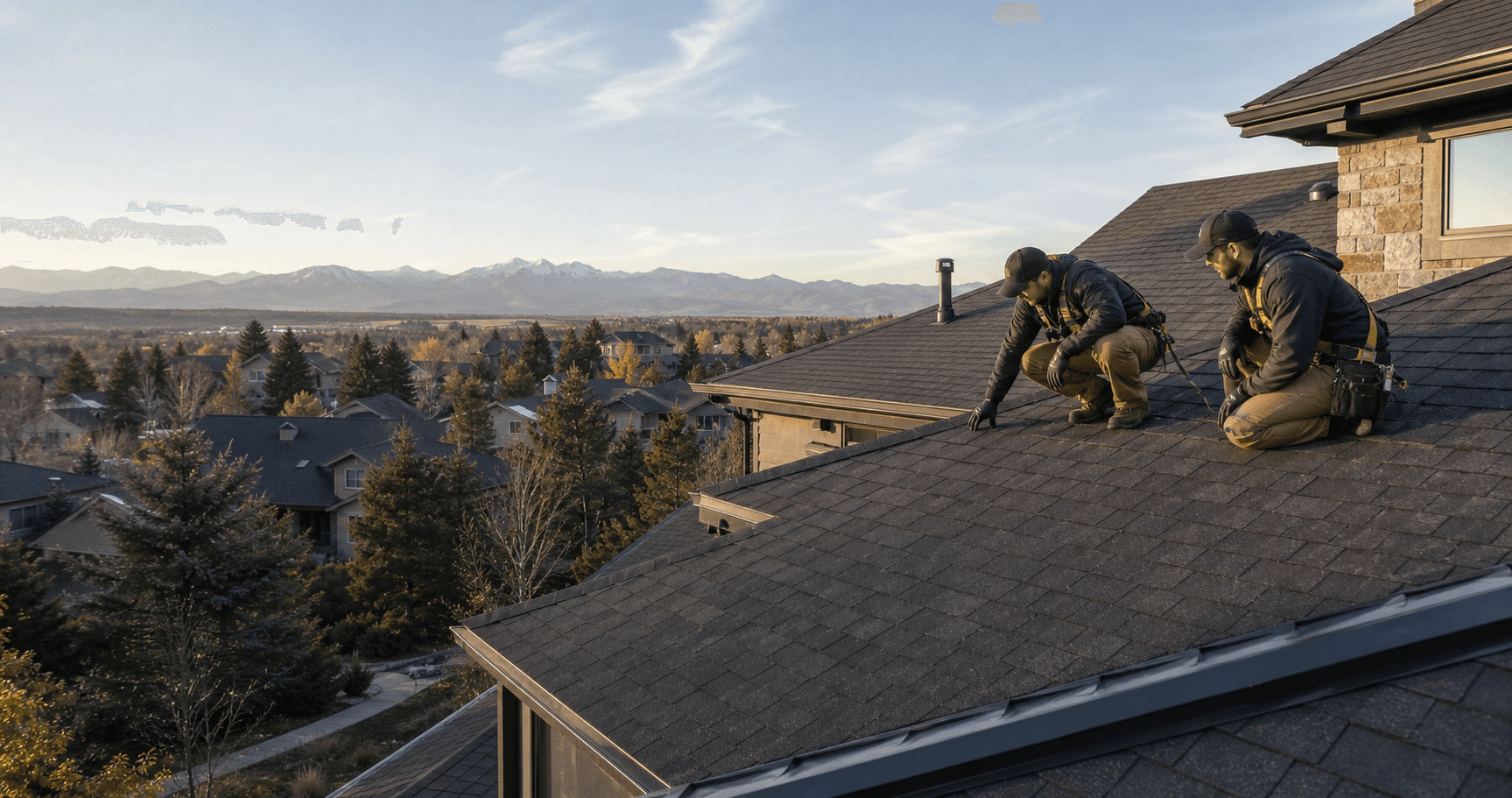
Urgent roof stabilization
During an active leak, the first goal is to reduce ongoing damage without creating unsafe conditions. Stabilization is followed by documentation and a clear permanent repair path.
What we look after
Responsive roof stabilization for active leaks, wind damage, missing materials, fallen debris, and storm-related openings.
Rapid review of the reported damage, access, weather, and safe stabilization options.
Tarping or targeted temporary measures when a permanent repair cannot be completed immediately.
Photos and notes that explain visible conditions before and after stabilization.
A defined next step once conditions allow full inspection, drying, and compatible repair work.
The whole assembly
A wet, icy, wind-damaged, or lightning-exposed roof can be unsafe to access. The response method must account for weather, slope, electrical hazards, falling debris, and interior conditions.
Temporary protection is intentionally temporary. Once the area is safe and dry enough to inspect, the roof assembly and any concealed moisture should be evaluated for a lasting repair.
Ask about your roofWhat the process gives you
The goal is not only to complete work. It is to make the condition, the recommendation, and the next step easier to understand.
The most urgent water pathways and safety concerns are addressed first.
Photos establish what was visible at the time of the visit.
Know what temporary work was done and what permanent work remains.
The path forward
We document the roof, the details around it, and the symptoms you have noticed.
You receive plain-language findings, priorities, options, and the tradeoffs between them.
The scope defines materials, preparation, property protection, timing, and next steps.
Work moves through setup, installation or repair, cleanup, and a final walkthrough.
Emergency Roof Repair questions
The roof itself determines the final recommendation, but these answers can help you prepare.
Start a conversationMove people and valuables away from the area, contain water if it is safe, avoid electrical fixtures, and do not climb onto a wet or storm-damaged roof. Call for professional guidance.
No. It is a short-term measure intended to reduce exposure until the roof can be safely inspected and repaired with compatible materials.
Interior protection and ground-level assessment may be possible, but roof access depends on wind, lightning, precipitation, ice, darkness, and slope. Crew safety determines what can be done.
Start with the facts